Commercial Roof Maintenance Plans That Protect Building Value
A practical guide to building a commercial roof maintenance plan that reduces surprises, extends roof life, and keeps documentation ready for owners and insurers.
Posted:
Published by: Made Property Services Team
Commercial Roof Maintenance Plans That Protect Building Value
A practical guide to building a commercial roof maintenance plan that reduces surprises, extends roof life, and keeps documentation ready for owners and insurers.
Posted:
Published by: Made Property Services Team
Why Commercial Roofs Should Be Managed Like Building Assets
For building owners, management companies, and REITs, the roof is not just a cover. It is a critical system that protects operations, inventory, and the long-term value of the property.
A disciplined maintenance plan helps you control risk, budget more accurately, and respond faster after severe weather. For Made Property Services, this asset-focused approach is the foundation of commercial roofing maintenance.
Start With a Baseline Roof Report
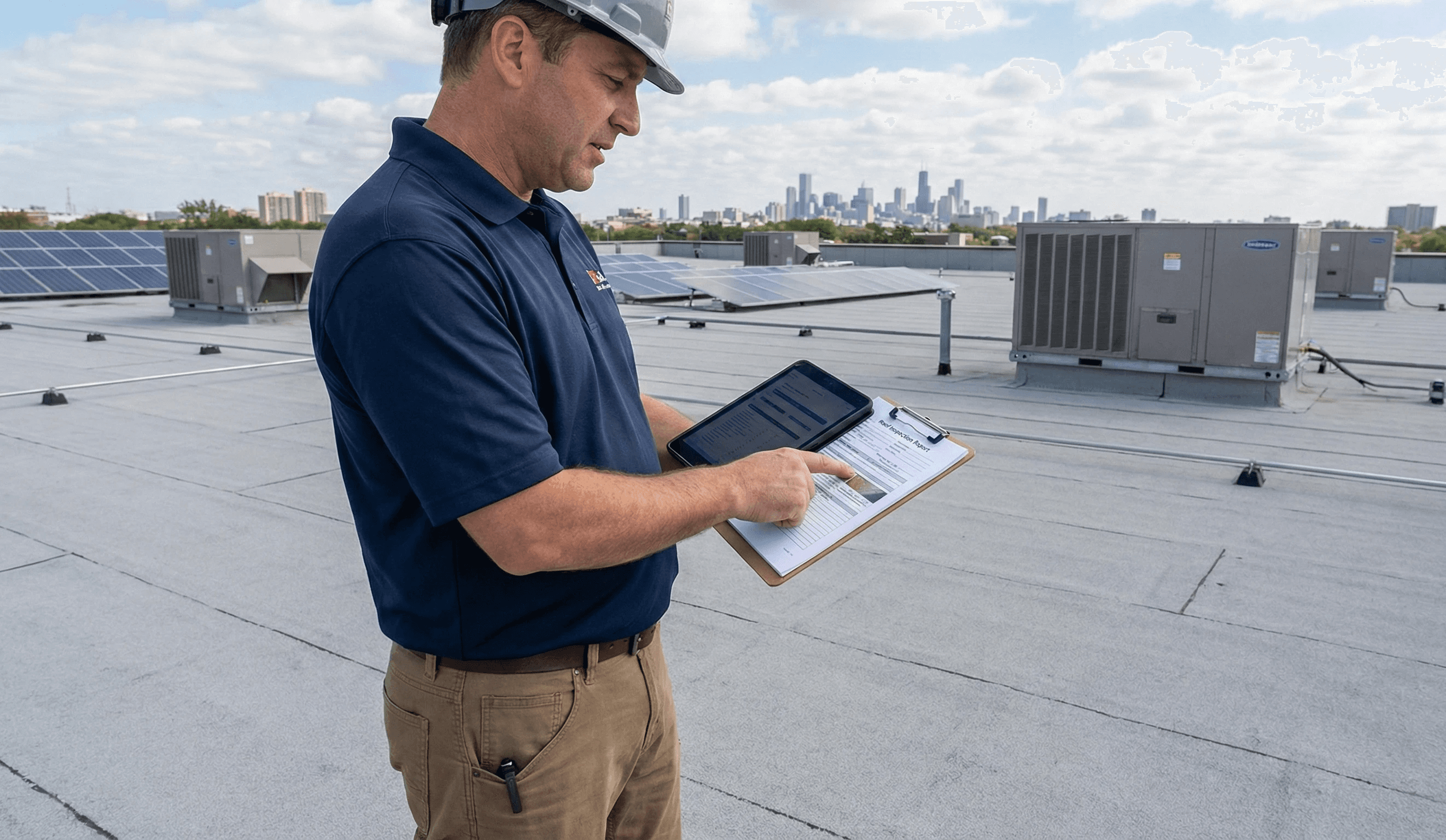
A maintenance plan works best when it starts with a clear, documented baseline.
A strong baseline typically includes:
roof system type and age
current leak history
photos of penetrations and transitions
drainage and ponding areas
priority repairs and short-term risks
Once you know what you are managing, it becomes easier to plan repairs, compare year-over-year changes, and explain roof needs to stakeholders.
Match Inspections to the Roof Type and Exposure
Not every roof needs the same inspection cadence. A single-site retail building and a large industrial facility face different stress and foot traffic.
A practical inspection schedule should account for:
roof membrane type and seams
equipment density on the roof
tree coverage and debris load
historic wind and hail patterns
past contractor activity
Regular inspections catch small failures early, before they become interior damage, mold risk, or tenant disruption.
Prioritize Small Repairs Before They Turn Into Claims
Many expensive roof events start as small issues that are easy to miss from the ground.
Common early problems to address include:
loose edge metal and coping
open seams or punctures
clogged drains and scuppers
cracked pipe boots
failing sealant at penetrations
Proactive repairs are usually faster and cheaper than emergency calls, and they help protect warranties by keeping the system performing as designed.
Build a Documentation Routine That Scales
Commercial roof decision-making often involves owners, property managers, and vendors. Documentation keeps everyone aligned and reduces back-and-forth.
A simple routine can include:
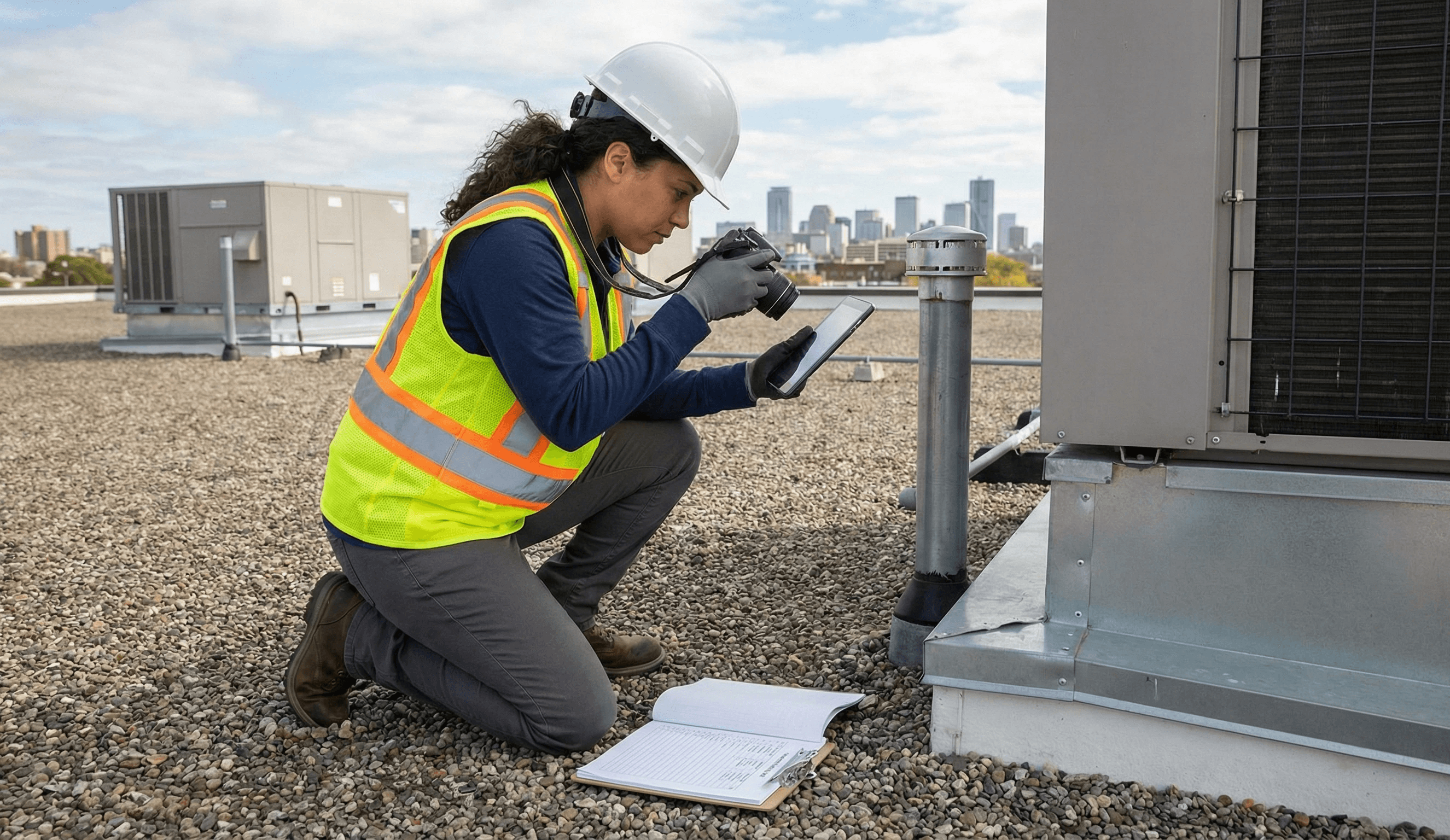
inspection notes and photos after each visit
a running repair log
vendor proposals tied to roof locations
warranty files and product data
a one-page status summary for leadership
This kind of structure supports predictable planning and makes storm response smoother, especially when multiple properties are involved.
Plan Life Cycle Budgets, Not Just Emergency Spend
A good plan does not wait until the roof fails. It sets expectations for repairs, mid-life upgrades, and eventual replacement.
Budget planning is easier when you track:
remaining useful life by roof area
typical repair spend per year
insulation and energy improvement opportunities
known weak details and recurring leaks
replacement timelines by priority
Even if a replacement is years away, having a roadmap helps you avoid rushed decisions and minimize downtime when the work becomes necessary.
Use a Storm Protocol to Reduce Downtime
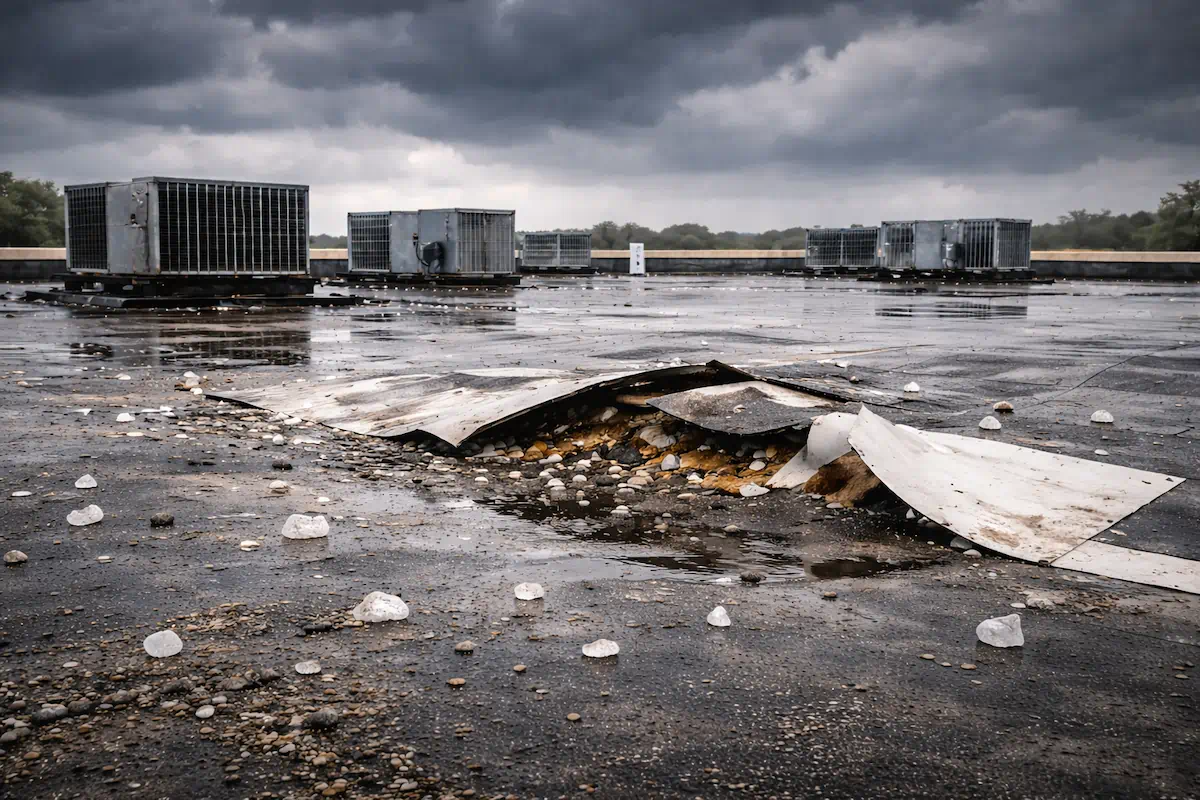
After major wind or hail, speed matters. Having a protocol helps teams act quickly and safely.
A storm protocol should cover:
who inspects and when
how photos are captured and stored
temporary mitigation steps
how tenants report leaks
when to involve insurance partners
Because Made Property Services is experienced in storm damage work and claims support, the goal is to keep your response organized and defensible if a claim is needed.
Work With Specialists Who Understand Systems and Claims
Commercial buildings often have multiple roof types, complex details, and high consequences for mistakes.
Look for a partner who can provide:
system-specific repair strategies
clear scopes and line-item proposals
proper safety and access planning
consistent communication with managers
claim support when storm damage is confirmed
This is especially important for large commercial buildings where a missed detail can affect multiple tenants and large interior areas.
Conclusion
A commercial maintenance plan is a risk-management tool. When you treat the roof like an asset, you reduce surprises, protect operations, and make decisions based on data instead of urgency. If you manage properties in the St. Louis area, having organized records and a clear plan can also make post-storm conversations with insurers far more straightforward.
Why Commercial Roofs Should Be Managed Like Building Assets
For building owners, management companies, and REITs, the roof is not just a cover. It is a critical system that protects operations, inventory, and the long-term value of the property.
A disciplined maintenance plan helps you control risk, budget more accurately, and respond faster after severe weather. For Made Property Services, this asset-focused approach is the foundation of commercial roofing maintenance.
Start With a Baseline Roof Report
A maintenance plan works best when it starts with a clear, documented baseline.
A strong baseline typically includes:
roof system type and age
current leak history
photos of penetrations and transitions
drainage and ponding areas
priority repairs and short-term risks
Once you know what you are managing, it becomes easier to plan repairs, compare year-over-year changes, and explain roof needs to stakeholders.
Match Inspections to the Roof Type and Exposure
Not every roof needs the same inspection cadence. A single-site retail building and a large industrial facility face different stress and foot traffic.
A practical inspection schedule should account for:
roof membrane type and seams
equipment density on the roof
tree coverage and debris load
historic wind and hail patterns
past contractor activity
Regular inspections catch small failures early, before they become interior damage, mold risk, or tenant disruption.
Prioritize Small Repairs Before They Turn Into Claims
Many expensive roof events start as small issues that are easy to miss from the ground.
Common early problems to address include:
loose edge metal and coping
open seams or punctures
clogged drains and scuppers
cracked pipe boots
failing sealant at penetrations
Proactive repairs are usually faster and cheaper than emergency calls, and they help protect warranties by keeping the system performing as designed.
Build a Documentation Routine That Scales
Commercial roof decision-making often involves owners, property managers, and vendors. Documentation keeps everyone aligned and reduces back-and-forth.
A simple routine can include:
inspection notes and photos after each visit
a running repair log
vendor proposals tied to roof locations
warranty files and product data
a one-page status summary for leadership
This kind of structure supports predictable planning and makes storm response smoother, especially when multiple properties are involved.
Plan Life Cycle Budgets, Not Just Emergency Spend
A good plan does not wait until the roof fails. It sets expectations for repairs, mid-life upgrades, and eventual replacement.
Budget planning is easier when you track:
remaining useful life by roof area
typical repair spend per year
insulation and energy improvement opportunities
known weak details and recurring leaks
replacement timelines by priority
Even if a replacement is years away, having a roadmap helps you avoid rushed decisions and minimize downtime when the work becomes necessary.
Use a Storm Protocol to Reduce Downtime
After major wind or hail, speed matters. Having a protocol helps teams act quickly and safely.
A storm protocol should cover:
who inspects and when
how photos are captured and stored
temporary mitigation steps
how tenants report leaks
when to involve insurance partners
Because Made Property Services is experienced in storm damage work and claims support, the goal is to keep your response organized and defensible if a claim is needed.
Work With Specialists Who Understand Systems and Claims
Commercial buildings often have multiple roof types, complex details, and high consequences for mistakes.
Look for a partner who can provide:
system-specific repair strategies
clear scopes and line-item proposals
proper safety and access planning
consistent communication with managers
claim support when storm damage is confirmed
This is especially important for large commercial buildings where a missed detail can affect multiple tenants and large interior areas.
Conclusion
A commercial maintenance plan is a risk-management tool. When you treat the roof like an asset, you reduce surprises, protect operations, and make decisions based on data instead of urgency. If you manage properties in the St. Louis area, having organized records and a clear plan can also make post-storm conversations with insurers far more straightforward.
Ready to save on your roof?
Receive a quote to upgrade your roof and start saving on your electric bill.
Ready to save on your roof?
Receive a quote to upgrade your roof and start saving on your electric bill.
Recent Posts

Request a Quote
Roofing systems.
Made for your property.
Request a Quote
Roofing systems.
Made for your property.
Request a Quote